Taunton, Massachusetts Spray Foam Insulation – Solutions for Established Homes and Varied Property Designs
Fall River Spray Foam Insulation helps Taunton homeowners and property owners address heat loss, air leakage, and insulation gaps in older and newer buildings. Our services include attic insulation, crawl space insulation, and basement insulation, with solutions tailored to existing construction and moisture conditions. Call +1 (508) 941-8128 to request an estimate.
Contact Us
We will get back to you as soon as possible.
Please try again later.
• Problem
How Taunton's Older Homes and Varied Building Designs Affect Insulation
Taunton's established residential neighborhoods include older wood-framed houses, renovated properties, and newer construction. In older homes, insulation may be uneven, deteriorated, or insufficient in areas such as attics, crawl spaces, and basements. Gaps around plumbing, electrical penetrations, and framing connections can allow conditioned indoor air to escape. Properties with unfinished basements, accessible crawl spaces, or converted upper floors may face additional insulation challenges. Exposed foundation walls, irregular framing, and restricted cavities can make consistent insulation coverage difficult, contributing to drafts, cold floors, and uncomfortable indoor temperatures.
Massachusetts experiences cold winters and warm, humid summers, making thermal insulation and air sealing important for year-round comfort. During winter, poorly insulated building assemblies can allow heat to escape, while summer humidity can make moisture management especially important in below-grade and enclosed spaces. A property assessment helps identify existing insulation conditions, air leakage, moisture concerns, and accessibility requirements. These findings guide material selection and determine whether attic, crawl space, or basement insulation is appropriate for the building.
• TOP SERVICES
Attic Spray Foam Insulation for Heat Loss and Air Leakage
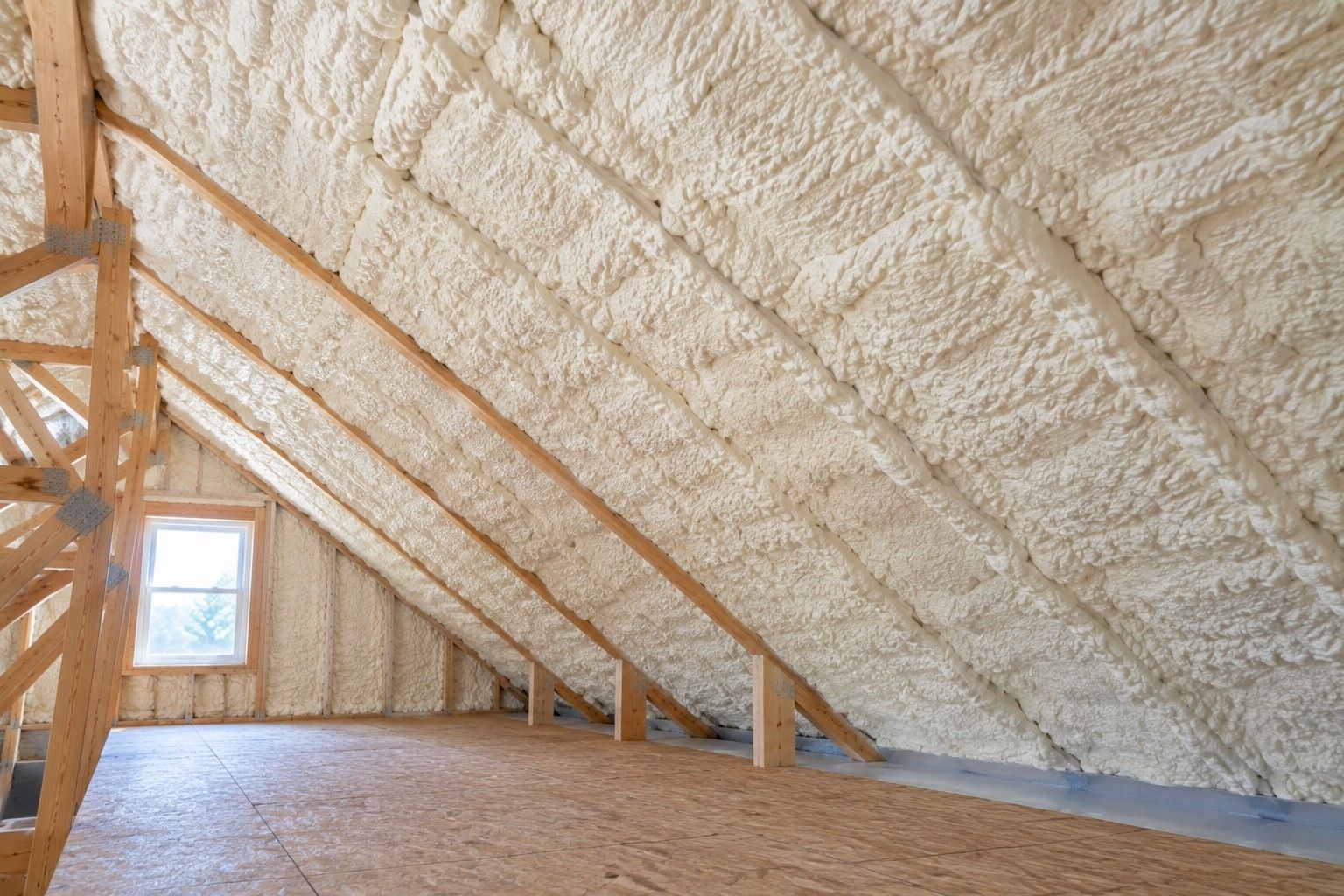
Attic insulation helps reduce unwanted heat transfer between conditioned living areas and unconditioned roof spaces. In older Taunton homes, insufficient insulation and gaps around ceiling penetrations can allow heated indoor air to escape, contributing to drafts and uneven temperatures.
Spray foam insulation may be suitable for specific attic applications, including air sealing around framing connections and insulation along appropriately designed roofline assemblies. Material selection depends on attic configuration, roof construction, and moisture-control requirements. For homes with unfinished attics or converted upper-level rooms, evaluating existing insulation, ventilation, and accessible cavities helps determine the most suitable installation approach.
Crawl Space Insulation for Cold Floors and Moisture Concerns
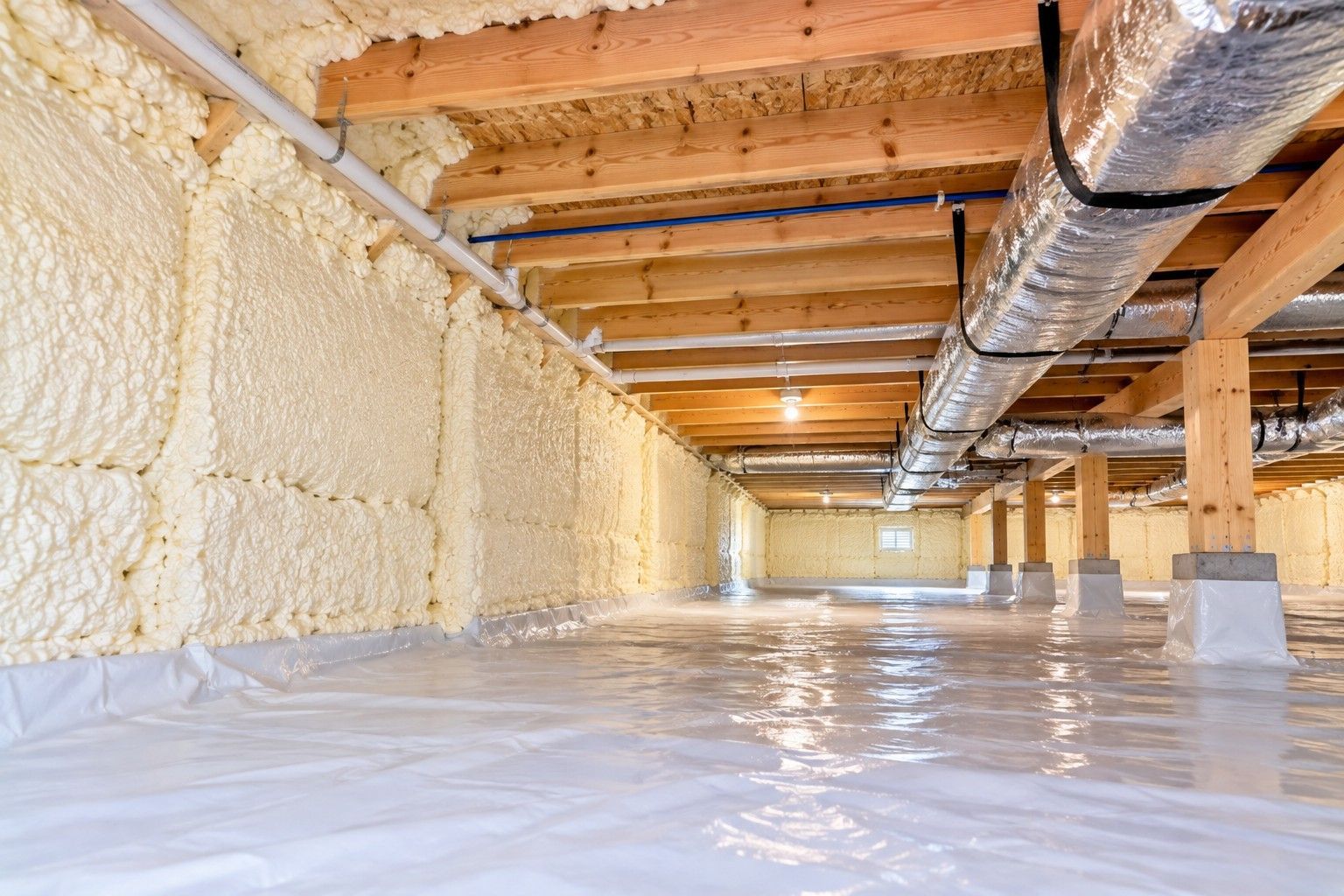
Crawl space insulation helps address heat loss and unwanted air movement beneath occupied living areas. Homes with accessible crawl spaces may experience cold floors, drafts, or temperature differences when floor assemblies and perimeter areas lack adequate insulation.
Spray foam can be considered for suitable crawl space surfaces, including floor framing or foundation walls, depending on the building's moisture-control and ventilation strategy. Proper installation requires evaluating existing dampness, exposed materials, and accessibility. For Taunton properties with crawl spaces, identifying moisture sources and air leakage pathways before installation helps establish an appropriate insulation approach without concealing unresolved water problems.
Basement Spray Foam Insulation for Foundation Walls and Rim Joists
Basement insulation helps improve thermal separation between conditioned living spaces and colder foundation assemblies. In older Taunton homes, exposed foundation walls, rim joists, and framing connections may contribute to drafts and heat loss.
Closed-cell spray foam may be suitable for certain basement wall and rim joist applications because it provides thermal resistance and air sealing. However, material selection depends on foundation construction, existing moisture conditions, and the intended use of the basement. Before installation, foundation seepage, damp surfaces, and other water-related concerns should be evaluated. Proper preparation helps determine whether basement insulation can be installed safely and effectively.
• cost
What Affects Spray Foam Insulation Cost in Taunton?
Spray foam insulation costs depend on the application area, selected material, required thickness, accessibility, and preparation requirements. Attic insulation projects may involve ceiling penetrations, roof framing, or existing insulation removal. Crawl space projects can require additional preparation because of restricted access or moisture concerns, while basement insulation may involve foundation walls, rim joists, and surface preparation.
Open-cell and closed-cell spray foam also differ in material characteristics and installation requirements. An on-site assessment helps determine appropriate coverage, necessary preparation, and a more accurate estimate.
• AREAS WE SERVE
Nearby Service Areas Around Taunton
• FALL RIVER SPRAY FOAM INSULATION
Why Choose Fall River Spray Foam Insulation?
Fall River Spray Foam Insulation emphasizes property-specific evaluations before recommending insulation materials. Existing insulation, air leakage, structural conditions, and moisture concerns are considered when determining suitable applications for attics, crawl spaces, and basements.
Our service approach focuses on appropriate surface preparation, professional spray foam equipment, controlled application methods, and attention to manufacturer specifications. For Taunton properties with older framing or below-grade spaces, these considerations help support informed insulation planning. Clear recommendations help property owners understand the proposed work, preparation requirements, and installation considerations before proceeding.
• FAQS
Frequently Asked Questions About Spray Foam Insulation in Taunton
Is spray foam insulation suitable for older homes in Fall River?
Yes, spray foam can be suitable for older Fall River homes, particularly those with air leaks, irregular framing cavities, or inadequate thermal protection. Before installation, technicians should assess existing materials, moisture conditions, and ventilation requirements. Open-cell or closed-cell products may be recommended depending on the building's structure, application area, and required thermal performance.
How much does professional spray foam insulation typically cost?
Installation costs depend on the foam type, application thickness, total coverage area, and accessibility. Closed-cell products generally cost more than open-cell alternatives because of their material characteristics and application requirements. Additional preparation, existing insulation removal, or protective coverings may affect pricing. A property-specific assessment helps establish the appropriate materials, scope, and estimated project cost.
Can spray foam help reduce drafts during Massachusetts winters?
Yes, properly installed foam can reduce air leakage and heat transfer, helping homes maintain more consistent indoor temperatures during cold Massachusetts winters. It expands into gaps and irregular cavities, creating an insulating layer in suitable building assemblies. Professional installers assess coverage requirements and application thickness, although actual energy savings depend on the property's overall condition.
What should property owners expect before spray foam installation begins?
Before installation, technicians assess the work area, inspect existing materials, and identify moisture or accessibility concerns. Preparation may include cleaning surfaces, protecting nearby materials, and arranging ventilation. Professional application requires specialized equipment and appropriate safety procedures. Property owners should also receive information about installation timing, temporary access restrictions, and product-specific reoccupancy requirements.
How long should occupants stay out of the building after spray foam installation?
Reoccupancy requirements depend on the foam product, ventilation conditions, and manufacturer instructions. Some products specify approximately 24 hours before reoccupancy, while others may require different waiting periods. Occupants should remain outside restricted application areas until the specified conditions are met. Professional installers should communicate applicable safety precautions and re-entry instructions before beginning work.
Request a Free Quote
Contact Us
We will get back to you as soon as possible.
Please try again later.